Few NFL front offices have been as aggressive as the Washington Commanders in acquiring talent to complete their roster.
Evidence of that could been seen in their activity in the trade market over the last half-year. A total of draft picks were used in trades for established stars Laremy Tunsil, Marshon Lattimore, and Deebo Samuel.
Tunsil, a Pro Bowler in three straight seasons, is seen as the safest bet of the three. Lattimore already made his Commanders debut after a midseason trade in 2024, and although he was hit or miss, there’s optimism that an offseason of rest and recovery will allow him to return to his best.
The odd man out – and notably, the cheapest asset to trade for – was Samuel, who only required a fifth-round pick in compensation.
The 29-year-old wideout was a first-team All-Pro and Pro Bowler in 2021, though he did not claim any awards since. He’s also coming off the least productive year of his career, excluding a 2020 season during which he only made seven appearances.
Samuel finished his 2024 campaign with 51 receptions for 670 yards and three touchdowns, and he also had 42 carries for 136 yards and a touchdown.
His reception count and yards per carry (3.2) were both career lows. More troubling, his yards per route run, a strong indicator of a receiver’s ability to impact the passing game, plummeted from a strong 2.26 in 2023 to just 1.60. This ranked 55th among 141 players who ran at least 100 routes and was also the lowest of his career.
Although his recent play was disappointing there are ways to explain his struggles. He suffered a calf strain in Week 2, severe pneumonia that required hospitalization in Week 7, and a rib injury in Week 8. Superstar left tackle Trent Williams also did not play after Week 11, an absence that caused Samuel to fall from 54.4 to 30 receiving yards per game.
2023 Offensive Player of the Year and superstar running back Christian McCaffrey also played just four games, and Samuel’s counterpart, wide receiver Brandon Aiyuk, only played in seven. Those injuries enabled opposing defenses to center their focus almost entirely on Samuel, whereas they couldn’t before.
Samuel still showed promising signs despite the San Francisco 49ers’ 6-11 finish to the year. He ranked second in yards after catch per reception (12.7) and eighth in yards per reception (16.1) from the slot among players with at least 10 receptions.
He was also 12th in yards per reception (7.3) on screen passes, though he showed a significant decline in his ability to force missed tackles. Still, there are signs that he can be an effective player in an elite offense with other weapons and improved blocking.
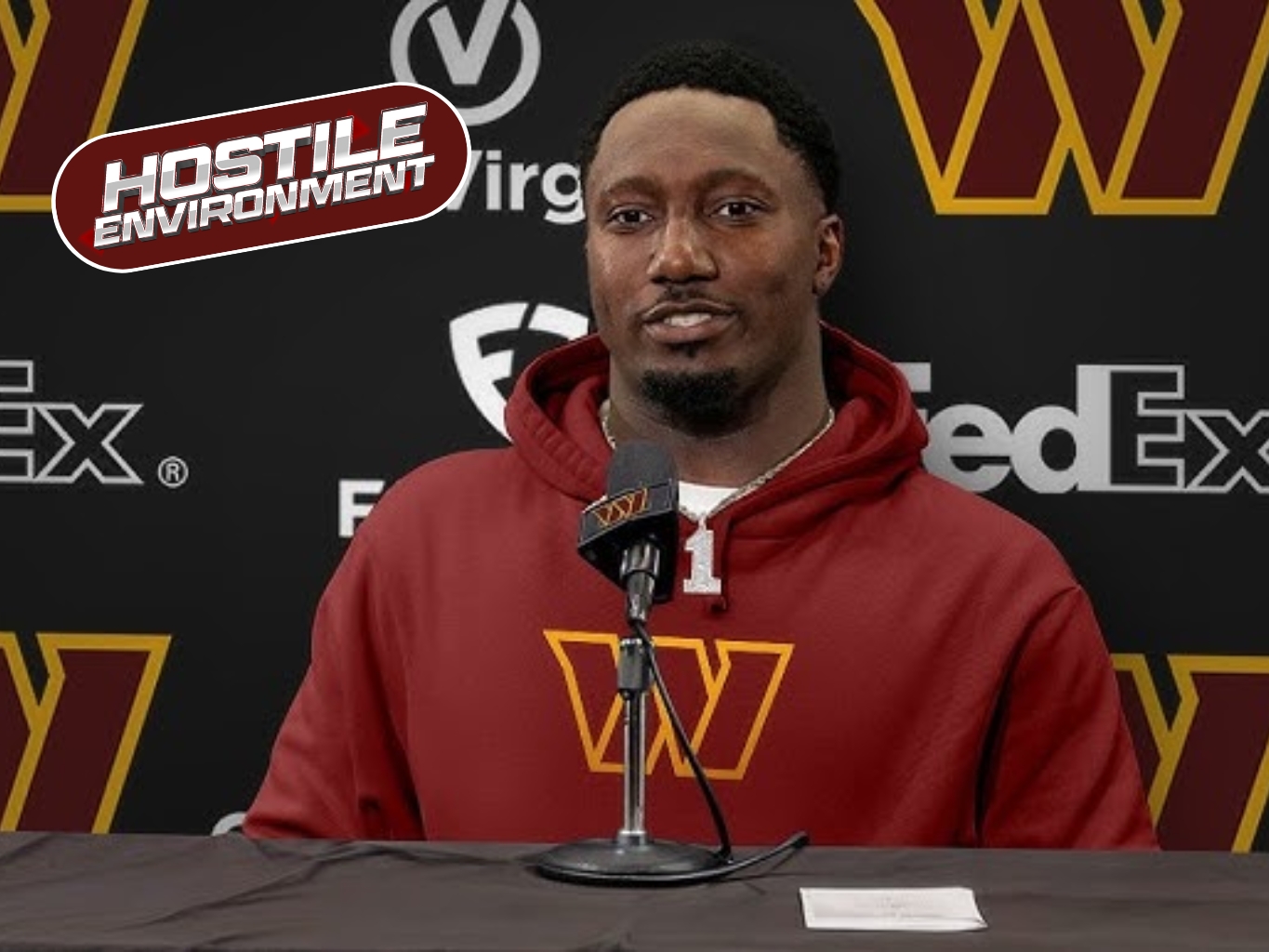
As Samuel settles into his new home, Commanders Head Coach Dan Quinn seems to disagree with the notion that his statistical regression is a sign of what’s to come.
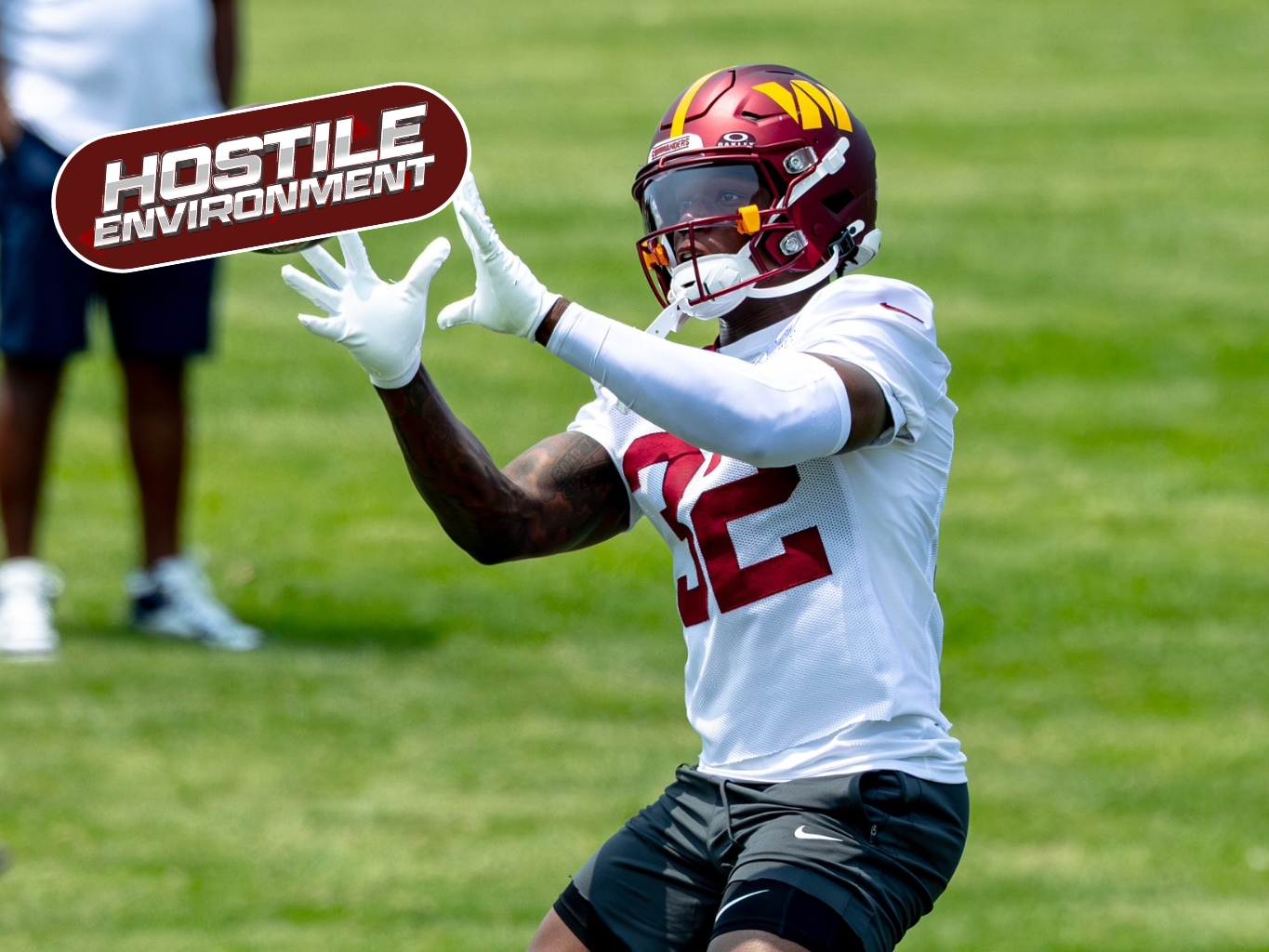
“I’d forgotten until [he was] out here how fast he is,” Quinn said before a minicamp practice. “It was maybe [that] I missed talking about it to that space because I was easily reminded, he’s one of the fastest players on the team.”
Commanders Offensive Coordinator Kliff Kingsbury also has first-hand experience with what Samuel brings to the table. He went head-to-head with his new receiver six times as the head coach of the Arizona Cardinals while Samuel was with the 49ers.
“He’s got a natural feel for things as he’s figuring this offense out, but [I] couldn’t be more thrilled having seen it up close and personal for those years to actually get to work with him,” Kingsbury said.
One of Samuel’s unique qualities is his versatility. He’s often lined up as the Z receiver, but his craftiness with the ball in his hands allows him to play in the slot, and his physicality allows him to spell starting running backs in the backfield.
That fits well with the Commanders’ system, which heavily involved 11 personnel (one running back, one tight end). The Commanders used this personnel group on 58.6 percent of their snaps, well ahead of 12 personnel (one running back, two tight ends; 23.3 percent) and any other group, none of which exceeded 5.9 percent.
Having Samuel and two other receivers on the field will give him freedom of movement. He could motion into the backfield, go to the slot, or start a play moving horizontally, all while the X and Z receivers anchor the corners outside of the numbers.
Samuel could also play the Z in a 2×2 (two receiving options on each half of the field), the preferred formation of the Commanders in 2024. That would keep him and Terry McLaurin spread as far apart as possible and add extra stress to the opposing secondary.
The extent of Samuel’s impact also depends on the productivity of his teammates, particularly players such as Zach Ertz, Ben Sinnott, Luke McCaffrey, and Jaylin Lane.
Ertz was phenomenal last year, particularly in high-leverage situations. He caught 84 balls for 809 yards and eight touchdowns across 20 regular-season and playoff games, by far his most productive showing since 2019.
Sinnott, a second-round selection in 2024, only logged six receptions for 51 yards and a touchdown. Commanders General Manager Adam Peters told Sinnott during his Draft Day call that he reminded him of Kyle Juszczyk and George Kittle, and his potential development into a dependable middle-field receiving threat and blocker would add yet another dimension to Washington’s offense.
McCaffrey and Lane are expected to compete for snaps at slot receiver whenever Samuel or McLaurin aren’t stationed there. McCaffrey waned in importance as a rookie and finished with less than 200 yards, but he reportedly turned heads during the offseason activities.
Lane did not get a ton of opportunities to produce in a limited passing attack at Virginia Tech, but he is exceptional at gaining yards after catch and ran a 4.34 40-yard dash at the combine. His blazing speed is another weapon the Commanders didn’t have at their disposal a year ago.
While Samuel might not be the extraordinary receiver he was in 2021, there’s still reason to believe that he can produce if he’s healthy and motivated, both of which appear to be the case. He’s also stepping into a situation where a rising tide lifts all boats due to numerous players having opportunities to play impactful roles in the offense.
Yet to be mentioned is the looming impact of Jayden Daniels, who was fourth in QBR as a rookie.
The runaway Offensive Rookie of the Year helped McLaurin set a franchise record in touchdowns, revitalized Ertz’s career, and helped generate career years for Olamide Zaccheaus and Dyami Brown. The attention he commands from opposing defenses, combined with his talent and decision-making, should help him get the ball to Samuel in favorable positions.
All that said, the Commanders won’t take a huge hit if Samuel doesn’t pan out. He only counts for $5.2 million against the cap in 2025 and is an unrestricted free agent at the end of the season.
A productive season in Washington would likely incentivize Samuel and the Commanders to negotiate a contract extension, and a disappointing one would only cost a fifth-round pick.
For context, the Commanders’ fifth-round picks since 2020 were Jordan Magee, Dominique Hampton, KJ Henry, Sam Howell, Cole Turner, Darrick Forrest, Keith Ismael, and Khaleke Hudson.
Ultimately, Samuel has proven his worth in the NFL. He’s coming off a disappointing season, but he dealt with several injuries and ailments, and defenses were allowed to focus on him due to other key injuries as well. His production as recently as 2023, combined with the Commanders’ ascending roster, makes him an intelligent buy-low acquisition for a team with Super Bowl aspirations.